

Table of Contents
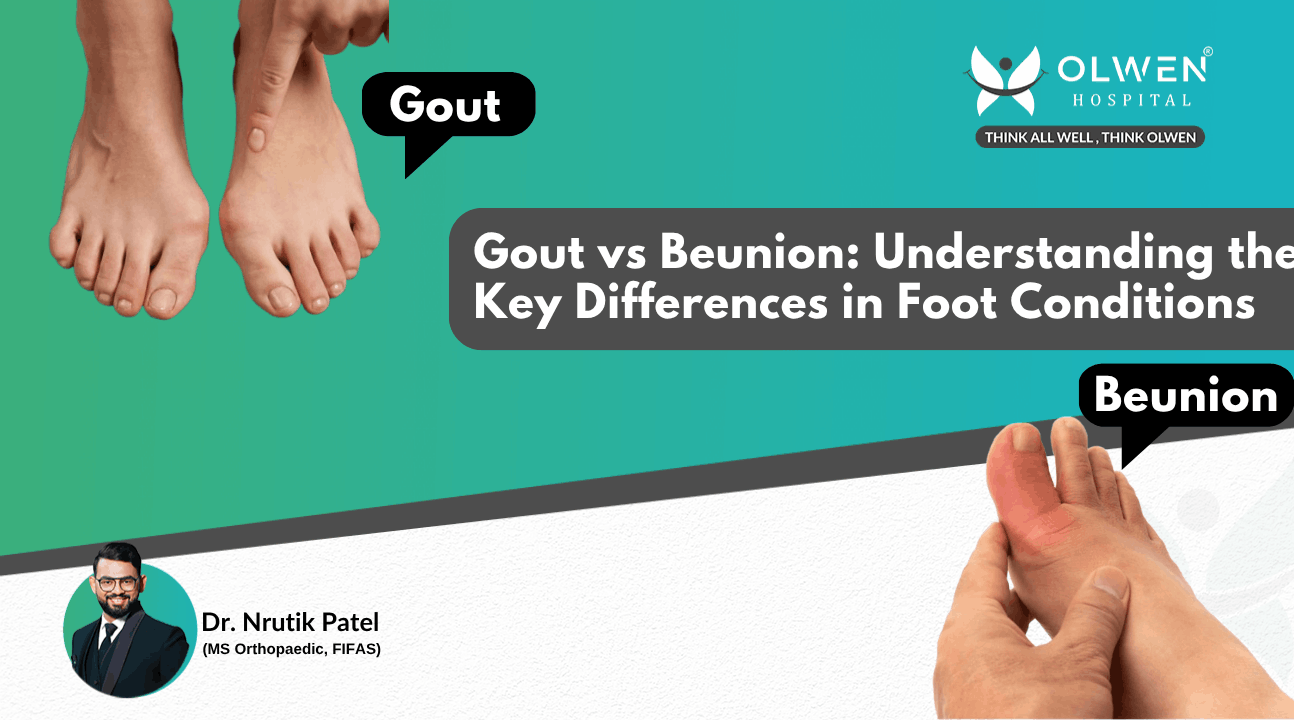
Table of Contents
Two common conditions that often cause confusion are Gout and Bunion. Although both usually affect the big toe, they differ greatly in their causes, symptoms, and treatment. Understanding these differences can help you take the right steps toward relief.
What is Gout?
Gout is a type of arthritis caused by excess uric acid in the body. When uric acid levels rise, sharp crystals form and accumulate in the joints, leading to sudden and severe pain. In some cases, this condition can also affect other joints, including the ankle, which is commonly referred to as ankle gouty arthritis.
Gout attacks often occur without warning, especially at night. The affected joint may become red, swollen, warm, and extremely sensitive. Even a slight touch can cause intense discomfort. It is more common in men, individuals with obesity, and those who consume high-purine foods such as red meat and alcohol.
What is a Bunion?
A bunion is a structural deformity that appears as a bony bump at the base of the big toe. It develops when the toe shifts inward, causing the joint to stick outward.
Unlike gout, bunions form gradually over time. Common causes include genetics, tight or narrow footwear, and abnormal foot structure. Initially, it may not cause pain, but over time it can lead to discomfort, swelling, and difficulty in wearing shoes.
Key Differences Between Gout and Bunion
Gout is an inflammatory condition caused by uric acid crystal buildup, while a bunion is a physical deformity of the joint. Gout usually starts suddenly with intense pain, whereas bunion discomfort develops slowly.
In gout, the joint appears red and inflamed, while a bunion looks like a firm bump with visible toe misalignment. Pain in gout is sharp and severe during flare-ups, while bunion pain is more consistent and increases with pressure.
Symptoms of Gout and Bunion
Gout symptoms include sudden pain, redness, swelling, and a burning sensation in the joint. These symptoms may last for a few days but can return if not managed properly.
Bunion symptoms include a visible bump, swelling, toe misalignment, and irritation due to footwear. Over time, it may cause stiffness and reduced flexibility.
Diagnosis and Treatment
Gout is diagnosed through blood tests, joint fluid analysis, and imaging. Treatment includes medications to control uric acid levels and reduce inflammation, along with lifestyle changes such as a healthy diet and proper hydration.
Bunions are diagnosed through physical examination and X-rays. Treatment focuses on reducing discomfort by using proper footwear, padding, orthotics, and pain relief methods. In severe cases, surgery may be required.
For accurate diagnosis and advanced treatment, consult Dr Nrutik Patel, recognized as one of the best orthopedic surgeons in Ahmedabad.
When to See a Foot and Ankle Surgeon – Dr. Nrutik Patel
If you notice sudden, intense pain, persistent swelling, or difficulty in walking, it’s important not to ignore these signs. Seeking timely medical attention from a orthopedic surgeon like Dr. Nrutik Patel can help in early diagnosis and effective treatment, preventing the condition from worsening and ensuring quicker recovery.
Prevention Tips
To reduce the risk of gout, maintain a balanced diet, stay hydrated, and limit alcohol intake. For bunions, wear comfortable shoes with enough space for your toes and avoid tight footwear for long periods.
FAQs
Conclusion
Although both conditions affect the same area, gout and bunion are completely different. Gout is sudden and inflammation-based, while bunions develop gradually due to structural changes. Identifying the symptoms early helps in choosing the right treatment and avoiding long-term discomfort.