

Table of Contents
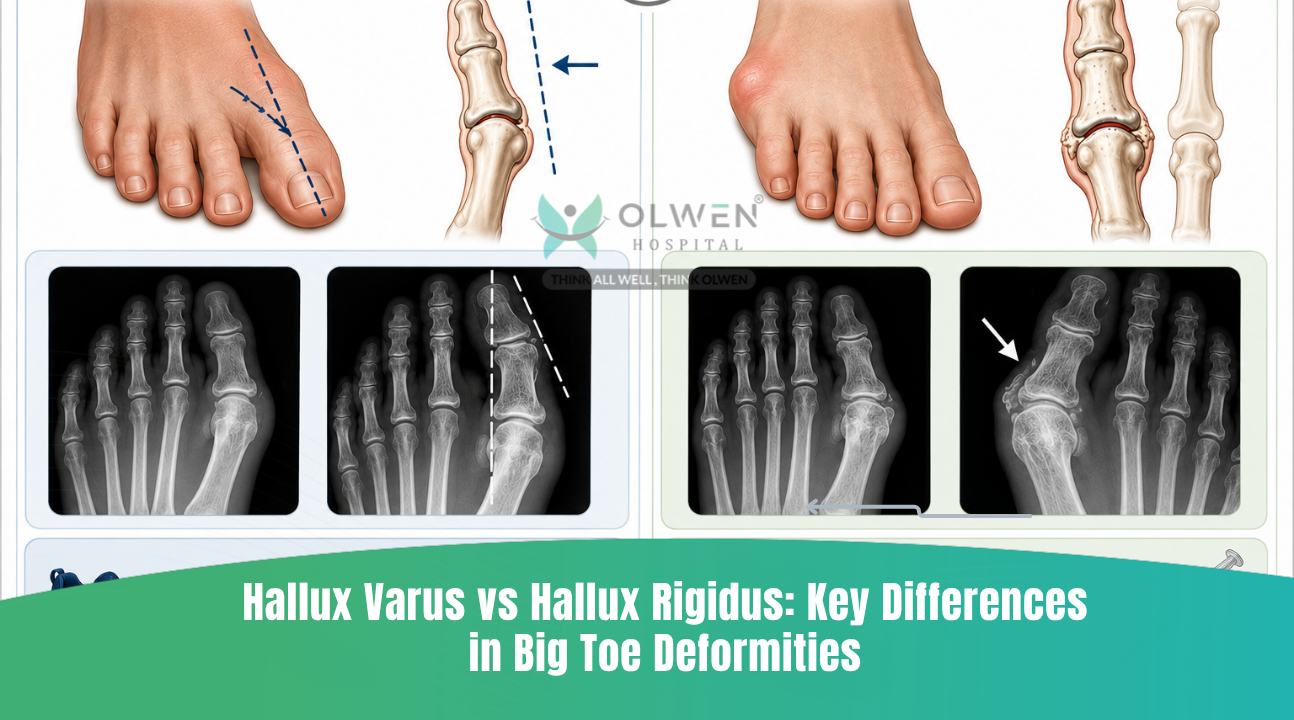
Table of Contents
Certain conditions can affect the big toe and lead to pain and difficulty in movement. Two such conditions are Hallux Varus and Hallux Rigidus. Although both affect the same toe, they differ in their causes, symptoms, and treatment methods.
What is Hallux Varus?
Hallux varus is a condition in which the big toe deviates inward, away from the second toe, creating a noticeable gap between the toes. This change in alignment can affect the overall structure and balance of the foot.
It may occur due to factors such as muscle or tendon imbalance, structural variations in the foot, or previous injury. In some cases, it may also be present from birth.
People with hallux varus may notice changes in the appearance of the foot, along with mild discomfort or difficulty wearing certain types of footwear.
What is Hallux Rigidus?
Hallux rigidus is a condition that affects the joint at the base of the big toe, leading to stiffness and reduced movement. It is commonly associated with Osteoarthritis.
This condition mainly impacts the flexibility of the toe, making movements like bending or pushing off during walking feel restricted.
Some people may experience stiffness, mild swelling, or discomfort in the joint area, especially during activities that involve movement of the big toe.
Key Differences Between Hallux Varus and Hallux Rigidus
The most noticeable difference between these two conditions is how they affect the big toe. In Hallux Varus, the toe shifts inward, away from the second toe, leading to a visible change in alignment. In contrast, Hallux Rigidus primarily affects the joint, causing stiffness and limiting movement without significantly altering the toe’s position.
Another key difference lies in their underlying causes. Hallux Varus is usually related to soft tissue imbalance, structural abnormalities, injury, or sometimes previous surgical procedures. On the other hand, Hallux Rigidus is commonly associated with joint degeneration, especially osteoarthritis.
Symptoms also differ between the two conditions. Hallux Varus mainly leads to alignment changes and difficulty with footwear, while Hallux Rigidus is more likely to cause pain, stiffness, swelling, and reduced range of motion in the joint.
Diagnosis and Treatment Treatment
For Hallux Varus, mild cases can be managed with splints, proper footwear, and physical therapy. Severe cases may require surgery to correct the alignment.
For Hallux Rigidus, non-surgical treatments include anti-inflammatory medications and orthotics to reduce pressure on the joint.
In advanced cases, surgical options like removing extra bone from the joint, fusion, or replacement may be considered. If you are experiencing persistent symptoms, consulting an expert like an Orthopedic Foot And Ankle Surgeon can help in accurate diagnosis and choosing the right treatment plan.
Consult a Foot & Ankle Specialist
If you are experiencing foot or ankle pain, deformity, or difficulty in daily activities, it’s important to get it checked early. A proper diagnosis helps in choosing the right treatment and avoiding long-term complications.
Specialists like Dr. Nrutik Patel, an experienced orthopedic foot and ankle surgeon, focus on identifying the exact cause of the problem and guiding patients with suitable treatment options.
FAQs
Conclusion
Hallux Varus and Hallux Rigidus may affect the same toe, but they are quite different conditions. One mainly changes the position of the toe, while the other limits its movement and flexibility.
Understanding these differences helps in early diagnosis and proper care. If you notice any unusual symptoms, consulting an foot expert can help you manage the condition effectively and prevent further complications.